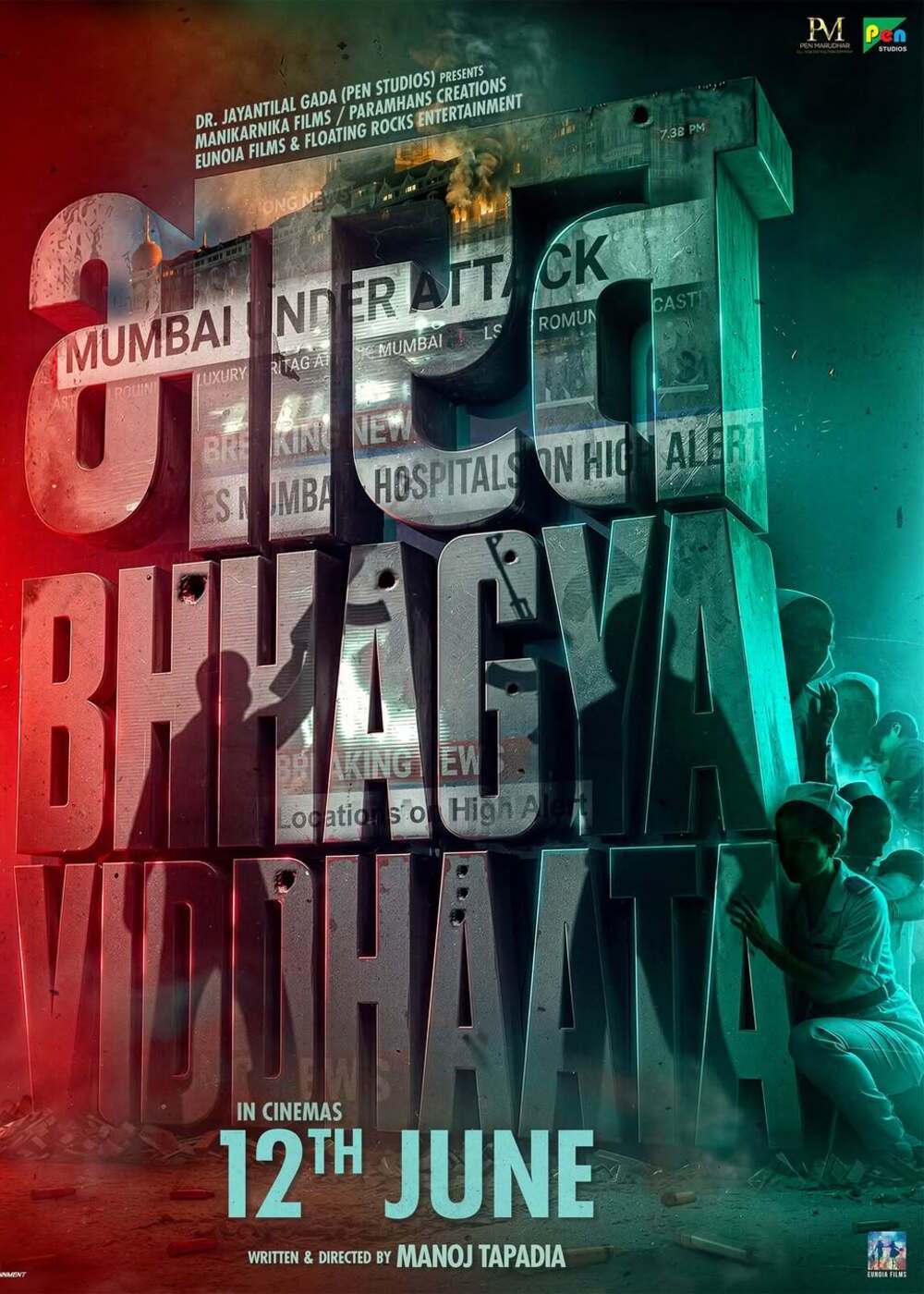
A Breath of Fresh Air or a Plea for Nostalgia? A Deep Dive into *Bharat Bhhagya Viddhaata*
As critics who have seen countless depictions of heroism—from action blockbusters filled with cinematic excess to sweeping historical epics dripping with melodrama—it is often difficult to find a film that manages the delicate dance between visceral reality and mainstream entertainment. Bharat Bhhagya Viddhaata, which tackles the emotionally charged backdrop of the 26/11 terror attacks in Mumbai, attempts precisely this feat. It seeks to shine a much-needed spotlight on the 'unseen heroes': the healthcare workers, specifically the nurses, whose quiet bravery defied overwhelming trauma. While the film certainly boasts moments of immense human grace and contains some genuinely solid technical sequences, it is not without its structural wobbles. My review aims to dissect this ambitious offering, examining what succeeds with masterful restraint and where it occasionally falls victim to comforting, predictable Bollywood melodrama.
Plot
The narrative of Bharat Bhhagya Viddhaata is framed by a sobering reality that demands quiet attention: the monumental impact of state-level tragedy on individual lives. Rejecting the typical grand-scale action spectacle focused purely on military combat, the story roots itself instead in the claustrophobic, yet pulsing, environment of Cama Hospital. The plot’s strength lies in its commitment to a localized, deeply human perspective. We aren't given tales of national glory; we are presented with micro-stories of survival—the constant battle fought over IV drip rates, blood type compatibility, and managing the panic that blooms in unexpected corners of the hospital wards.
The film establishes its core rhythm brilliantly by first showing us 'normal.' We follow Gita Gandhare (Kangana Ranaut) and her circle of nursing colleagues. These initial sequences are vital; they establish a crucial sense of professional camaraderie and personal normalcy—the shared laughter during lunch breaks, the comforting banter on crowded local trains, the way their demanding jobs attempt to overshadow, yet ultimately cannot extinguish, their deeply rooted lives outside the hospital walls. This early atmosphere is deliberately warm, almost overly chirpy, which serves as a narrative ticking clock, building towards the inevitable sinister complication that will shred this fragile normalcy.
The plot then barrels forward with a dramatic shift: the news of chaos—the terrorist attacks at CSMT station—breaching their safe bubble. Suddenly, the hospital transforms from a place of healing into a crucible of intense survival. The script masterfully navigates the tension between professional duty and sheer primal fear. We see how protocol buckles under pressure, forcing characters to act not as trained professionals in theory, but as intuitive human beings fighting for life against senseless violence.
What distinguishes this plot from other retrospectives of 26/11 is its focus on institutional failure alongside individual resilience. The narrative does an excellent job highlighting the systemic constraints—the overworked staff, the limitations of government resources, and the friction between what *should* be done (protocol) versus what *must* be done (saving a life right now). This gives the story intellectual depth beyond mere action sequences.
However, the plot is not immune to structural predictability. Like many films tackling such sensitive real-life events, it sometimes struggles with an overwhelming urge to melodrama. When fate calls for heightened stakes, the narrative leans into broad emotional beats—sudden declarations of self-sacrifice or overly dramatic confrontations that feel less earned and more obligatory. The climactic action sequences, while visually impressive in their sheer scope (the hospital engulfed in darkness, whispers turning into screams), sometimes lack a sustained layer of unpredictable tension. Instead, they oscillate between moments of genuinely taut, breathless anxiety (where characters are doing the quiet, invisible work) and flashes of almost operatic sentimentality. The subplot involving Gita’s family dynamic—her husband, her daughter—is crucial for grounding the heroism in reality, but these personal stakes occasionally feel like mere window dressing when compared to the massive scope of the actual crisis, preventing the plot from sustaining a single, unbroken knot of tension.
Acting
The emotional success of Bharat Bhhagya Viddhaata rests heavily on its performances, and specific attention must be given first and foremost to Kangana Ranaut's portrayal of Geeta. From a dramatic standpoint, she anchors the entire film with an admirable blend of fierce capability and deeply fragile humanity. Her acting style here is perhaps her most fascinating iteration in years; it’s a restrained brilliance. She doesn't attempt to reinvent herself as some exaggerated action heroine; rather, she portrays an ordinary woman thrown into extraordinary circumstances. This nuanced performance allows her emotional journey to feel genuinely consequential.
The text repeatedly notes how the camera lingers on her face—and this is critical. It’s in those silent moments that she shines most brightly. Whether it’s conveying profound grief after witnessing a tragedy, or projecting quiet determination while navigating the chaos of the hospital floor, her communication largely relies on micro-expressions and posture. Her emotional heft becomes palpable precisely when the surrounding action momentarily subsides. The breakdown scene mentioned in the critique—where she grapples with the weight of saving lives while confronted by death at every turn—is a masterclass in physical storytelling. It bypasses grand speeches, choosing instead to reveal the exhausting, visceral toll on her psyche.
However, the film’s true unexpected acting strength shines through its ensemble cast, which successfully prevents Geeta from becoming an isolation star. Performers like Smita Tambe are absolute standout contributions. Her character, the shayari-loving nurse, injects a much-needed dose of warmth and vulnerability into a story that borders on being grimly oppressive. Her moments in distress or quiet triumph feel entirely organic; they don't serve just to support the narrative but elevate it independently. She embodies that necessary emotional counterweight to the sheer trauma depicted.
Furthermore, the film gives much due praise to supporting characters who are not on screen enough—the other nurses (Girija Oak), and even smaller figures like the police inspector. They don’t just exist; they interact with Ranaut’s character in ways that build a cohesive world. This ensemble nature is what rescues the narrative from the trap of making it all revolve around one star's charisma, particularly when considering Kangana's history of being the main focus regardless of the genre. The fact that the actors *around* her often feel more natural and ground the emotional reality solidifies this point.
The villains, although reduced to 'caricature,' are portrayed with a stark detachment that ironically serves the dramatic tension better than actual menace would have. They are faceless antagonists against an overwhelming institutional backdrop, forcing the human element—the nurses' innate empathy and resilience—to remain the focal point of emotional gravitas. In short, while Ranaut provides the primary vehicle for the audience’s focus, it is the collective effort described by the supporting cast that gives the narrative the sturdy, believable foundation required to handle such weighty material.
Cinematography
The visual architecture of Bharat Bhhagya Viddhaata is perhaps its most commendable technical achievement. The cinematography, managed by Ayan Sil, does not merely document the events; it actively participates in building the psychological tension. The film employs light and shadow less as mere decorative elements and more as extensions of the emotional state of the characters, creating a richly layered visual tapestry for the viewer to sink into.
One of the most striking textural shifts occurs between the first half and the second. The opening scenes, dedicated to delineating character relationships and establishing that shared 'bonhomie' among the nurses, are bathed in natural, slightly sun-drenched tones. This early lighting is warm—a visual representation of safety and routine. It’s a vibrant portrayal emphasizing the lived-in quality of the hospital environment: corridors catching morning light, cluttered ward rooms filled with life. The cinematography captures this mundane beauty effectively, making us root for the stability that seems so utterly fragile.
When the conflict erupts, the entire visual palette shifts dramatically and masterfully. As the terrorists breach the sanctity of the hospital, the lighting actively contributes to escalating fear and menace. The film doesn't rely on constant daylight clarity; instead, it plunges into a carefully managed darkness. We are moved through dimly lit passages and cornered wards where shadows become literal characters—heightening the air of danger without needing jump scares or excessive visual pyrotechnics. This use of chiaroscuro photography is highly sophisticated, forcing the viewer to constantly anticipate what lurks just out of sight.
The cinematographer gives us a sense of spatial disorientation, mirroring the physical and psychological state of the characters themselves. The multi-story hospital setting becomes a character in its own right—a labyrinthine playground for both heroism and terror. By shifting focus from wide shots establishing the scale of the massive institution to tight close-ups on hands, desperate faces, or single medical instruments, the camera keeps the audience perpetually involved in a deep level of emotional intimacy with the action.
Moreover, the visual contrast between mundane human life and horrific violence is cinematically potent. One might transition from a brightly lit scene of nursing staff sharing a laugh over a meal to the sudden, oppressive gloom of an attack unfolding down a neighboring corridor. The cinematography doesn't flinch; it pivots seamlessly, maintaining a consistent aesthetic quality whether capturing a soft lullaby of recovery or the jarring shock of violence. This technical finesse gives weight and seriousness to the entire enterprise.
If there is any area where the visual storytelling slightly falters, it's occasionally in its sheer predictability of spectacle—the set pieces sometimes feel like they are trying too hard to *look* high-stakes. Yet, even these moments are framed with sufficient technical skill that they rarely derail the overall impression. The cinematography remains the film’s most dependable asset, providing a beautiful and intelligent framework into which the emotional rollercoaster can ride.
Direction
Manoj Tapadia, who both wrote and directed Bharat Bhhagya Viddhaata, takes on an immensely challenging task: directing a deeply sympathetic story that is simultaneously based on real-life trauma. His directorial intent appears to be creating not just a disaster film, but a nuanced human chronicle—a testament to collective resilience more than individual might. This commitment defines the fundamental texture of the movie, steering it away from mindless action towards something bordering on thoughtful social commentary.
Tapadia’s pacing is generally highly effective. He does an admirable job of pacing the narrative across three distinct emotional phases: The Build-Up (the comfortable, normal life); The Catalyst (the sudden onset of chaos and confusion); and The Climax/Aftermath (organized resistance and eventual survival). By dedicating significant time to Phase I—those quiet moments of nursing banter and family dynamics—he ensures that when catastrophe finally strikes, the impact feels earned. We are invested in these characters' small joys, making the subsequent devastation feel not just exciting, but heartbreaking.
The film’s directorial strength is its masterful decision to focus on procedure and caregiving rather than firepower. Tapadia consistently directs attention to the practicalities of trauma management: the struggle to operate with dwindling resources, the difficulty of treating critically injured patients while simultaneously warding off armed threats, or the sheer logistics of maintaining order under extreme duress. This subtle choice elevates the movie above other generic disaster thrillers, making it feel more akin to a tense institutional drama.
Where his direction occasionally encounters friction is in maintaining a perfectly even keel. There are moments where the emotional urgency threatens to overwhelm the narrative’s steady hand. These instances manifest as overly dramatic montages or—most notably—the deployment of generalized nationalist rhetoric at the conclusion. The feeling that Tapadia cannot quite resist elevating mere occupational commitment into a grand, sweeping patriotic philosophy (the monologue about ‘duty’) dilutes the powerful realism established earlier in the film. It feels like a directorial concession to certain commercial expectations, pulling the otherwise grounded drama towards an anthemic climax.
The way he frames authority, too, is surprisingly insightful. He emphasizes that even when the hospital superintendents or even police authorities might be fallible, the true epicenter of competent action lies with the collective will of the frontline staff. This directorial choice successfully humanizes the crisis while critiquing the sometimes sterile nature of bureaucratic 'protocol' in a real-life emergency—a theme that cannot be praised enough.
Overall, Tapadia guides us through a highly sensitive emotional territory with visible dedication. He directs us to see not just what was done, but *how* it felt to do it: the exhaustion, the ethical dilemma of triage, and the sheer persistence required when every cell in your body is screaming for rest. While his attempts at climax sometimes become too overtly sentimental or politically charged, these are minor directional missteps on a deeply thoughtful and often emotionally resonant journey.
Conclusion
Bharat Bhhagya Viddhaata emerges as an ambitious and complex cinematic undertaking that manages to walk the tightrope between genuine art house sensitivity and commercial Bollywood spectacle. It is undoubtedly a technical success, largely thanks to the brilliant visual language provided by its cinematographer and anchored by Kangana Ranaut’s profoundly empathetic performance in quiet moments of struggle. The film possesses a remarkable heart—a core belief in the resilience of the ordinary person when faced with extraordinary brutality.
The greatest achievement is its narrative self-awareness; it consistently challenges the viewer to look past the cinematic spectacle and focus on the subtle, exhausting reality of caregiving under duress. The film successfully champions the idea that heroism doesn't always involve a spectacular act of gunplay or muscle flexing; sometimes, it’s simply showing up, day after day, armed only with dedication, compassion, and unwavering stamina—represented beautifully by the nursing staff.
However, this ambition also leads to its core weakness: uneven emotional control. The tendency towards melodramatic monologues, combined with moments of predictable romantic or familial tension that temporarily derail the high-stakes realism, prevents the film from achieving truly transcendent status. It is a movie that gathers immense power in its quietest scenes—the nurse looking at her uniform, the silent help during labor—and then occasionally discharges that power into needlessly exaggerated sentimentality.
For years, Bollywood has often attempted to elevate tragedy into pure melodrama; this film makes the sincere effort to remain tethered to ground-level reality. If it could shed just a few of its preachy, overly generalized 'nationalist' flourishes and maintain that steady psychological tension perfected in its middle act, it would be an undeniable masterpiece of modern Indian cinema.
It is a thrilling, often breathtaking watch—a sincere tribute to those who are the infrastructural backbone of society. It doesn't just recount history; it honors grit. While it stumbles occasionally under the weight of its own laudable intent, Bharat Bhhagya Viddhaata remains a vital watch, earning high marks for its technical execution and its unparalleled dedication to celebrating the profound dignity of routine work done in the face of unimaginable chaos. It is loud, but more importantly, it whispers the truth.
Share this review