Film Review: Azad Bharath
Plot
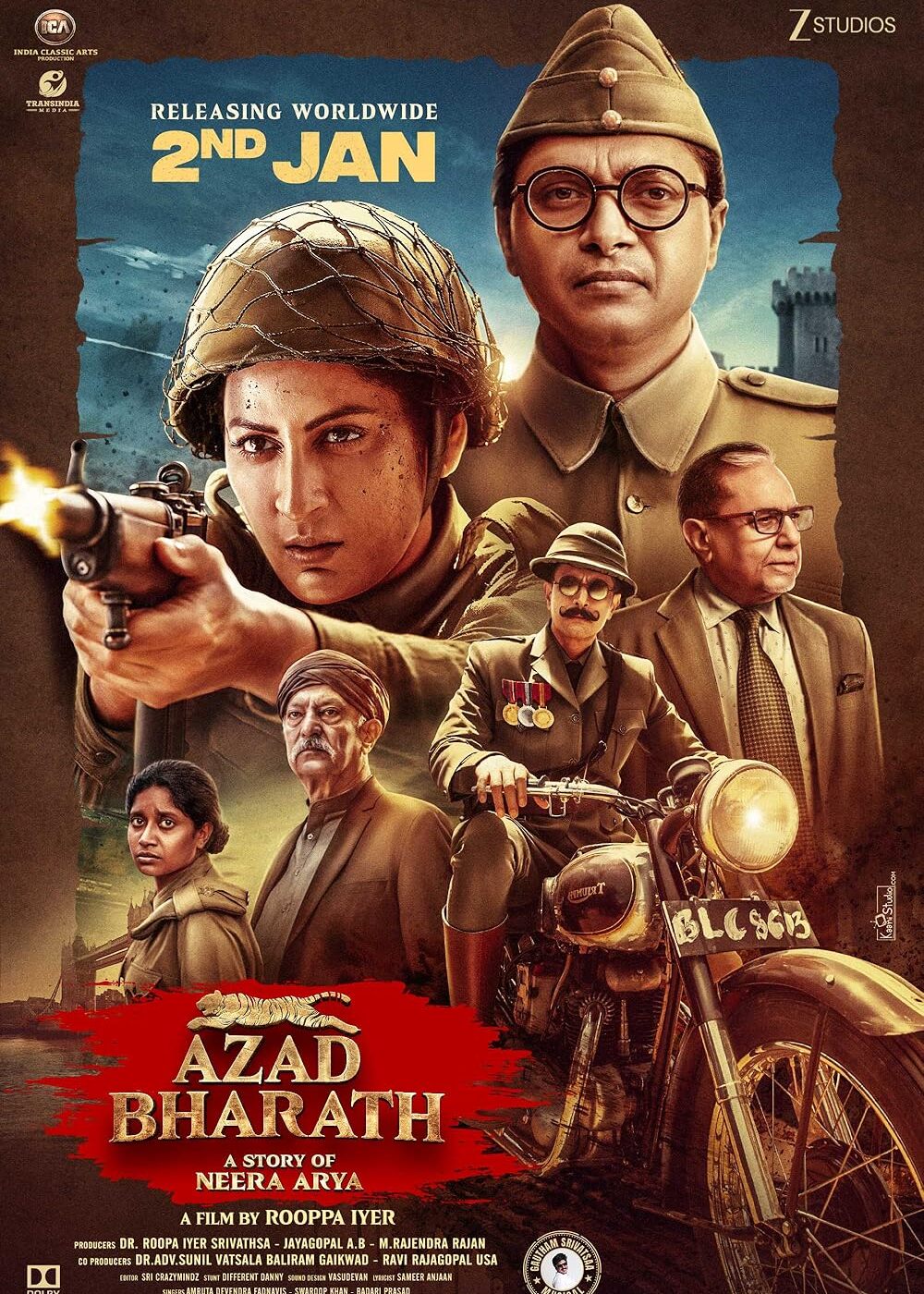
"Azad Bharath" sheds light on a chapter of India's fight for independence that remains largely untold: the story of Neera Arya, India's first woman spy, who played a pivotal role in the Indian National Army under the leadership of Netaji Subash Chandra Bose. The film begins in present-day London, where Neera, portrayed by Roopa Iyer, finds herself at a fashion house, but her attention to a traditional Netaji cap is a catalyst for her introspection. After being reprimanded by her boss, she dives into the historical significance of India's freedom struggle and the courageous women who contributed to it.
The film portrays Neera's journey from a life of comfort to one steeped in rebellion against British rule. It vividly describes her transformation and the inner conflict she faces, especially when her marriage to Shrikant Ranjan Das, a British Army officer, comes into play. The movie recounts her harrowing experience as she conducts espionage and gathers intelligence, eventually leading to her committing the heart-wrenching act of killing her husband to protect Netaji. This sets the stage for her capture and horrific torture at the hands of British forces, highlighting the emotional and physical cost of her commitment to the freedom movement.
While the film ambitiously aims to portray the significant yet underrepresented role of women in the Rani Jhansi Regiment, covering themes of sacrifice and loyalty, it often falls short in character development. Often, the movie tends to gloss over the girth of Neera's transformation and the motivations that ignited her spirit for the fight. Instead, the film offers glimpses into the collective struggle of women combatants while missing out on a deeper exploration of Neera's backstory, which could have added depth and significance to her character. As the narrative progresses, the film addresses the complexities of gender roles and societal expectations, drawing attention to the resistance women faced in taking up arms.
The screenplay does a commendable job of highlighting the camaraderie among women soldiers, their struggles with deprivation in the forest, and the psychological toll of war. However, it also leaves viewers wanting more context about Neera’s life before her entry into battle, leading to a somewhat rushed climax—a poignant moment that ultimately fails to leave its intended emotional imprint. The film ends with an abrupt recounting of Neera's life post-war, encapsulating her descent into obscurity, which felt like a missed opportunity to develop an emotional closure for the audience. Overall, "Azad Bharath" is ambitious in its scope but serves as a reminder that there are layers in history that need more thoughtful unpacking—the essence of storytelling that remains genuinely impactful.
Acting
The performances in "Azad Bharath" are a mixed bag that reflect both the potential and limited execution of its talented cast. Roopa Iyer, who also takes the helm as director, plays the lead role of Neera Arya. While her passion for the character is evident, her portrayal occasionally veers into melodrama, especially in emotionally charged scenes where we are supposed to empathize with her plight. At times, it feels as though she's trying too hard to convey the weight of Neera's sacrifices, which detracts from the authenticity of those moments. This inconsistency in acting quality makes it challenging for the audience to connect with her character fully.
On the other hand, Shreyas Talpade as Netaji Subash Chandra Bose brings a sense of earnestness to his role, successfully embodying the leader’s charisma and fervor. He largely succeeds in looking the part, even if the makeup used to age him doesn't always blend seamlessly with his youthful appearance. Talpade's performance offers genuine moments that resonate, particularly when he addresses the women of the Rani Jhansi Regiment, instilling a sense of hope and faith in their steadfast commitment to the cause of freedom. His part is, however, underexplored, and one feels that there was potential for more depth to showcase his interactions with Neera, especially considering their crucial alliance.
Priyanshu Chatterjee as Shrikant, Neera's husband, embodies the conflict of loyalties with sincerity. While his role is limited, he manages to convey a depth of emotion that highlights the tragic irony of their situation—a British officer bound to a woman fighting against colonial rule. The dynamics between him and Neera serve as a central point that the film touches upon but fails to explore thoroughly. Chatterjee’s nuanced performance adds a layer of complexity to the narrative, making his interactions with Neera poignant and heartfelt.
The supporting cast includes a group of women who represent the Rani Jhansi Regiment, some of whom deliver commendable performances that effectively portray the camaraderie and struggles faced by female soldiers. However, certain supporting roles lack sufficient depth due to underdeveloped characters and insufficient screen time, making it hard for any of them to stand out in a crowded narrative. Overall, while "Azad Bharath" boasts a cast with potential, the execution of their performances often fluctuates, with the lead delivery struggling to fully capture the emotional nuances of such a critical time in Indian history.
Cinematography
The cinematography in "Azad Bharath," helmed by a proficient team, attempts to juxtapose the historical and modern elements of the narrative, but the execution feels at odds with the film's ambitious intentions. The film starts with present-day London, where Neera works in a fashionable setting, and transitions to the gritty battlefields of India's freedom struggle. The cinematographer captures the contrasting worlds, yet often misses the opportunity to resoundingly highlight the gravity of the historical scenes.
While the film includes imagery of the forests where guerrilla warfare unfolded, the cinematography often lacks the visceral energy and dynamism that such action-packed scenes demand. Instead of fostering a visceral connection to Neera's battles, the visuals occasionally feel flat and fail to evoke a sense of urgency that would align with the turbulent events taking place. The battlefield sequences, while intended to be intense, seem somewhat muted, lacking the adrenaline rush typically associated with war films.
In terms of framing and composition, there are moments of brilliance—a few shots effectively showcase the grandeur of the settings and the camaraderie among the women soldiers. However, the reliance on static shots and conventional angles often enhances the overall predictability of the cinematography. The aesthetics of the film do offer glimpses into the contrasting lifestyles of the British officers and the Indian soldiers, yet a stronger artistic touch would have been welcome, especially in such poignant moments meant to resonate with the audience.
The color palette, shifting from the muted colors of war to the vibrant hues of the modern-day fashion world, attempts to promote a contrast between Neera's past and present. Still, the transitions feel abrupt at times, making it hard for viewers to stay anchored in the emotional landscape of the narrative. Additionally, action sequences occasionally suffer from shaky cam work that detracts from the intended intensity. While this choice could enhance realism during battle, it instead obscures the clarity of the scenes.
Overall, "Azad Bharath" is a visually ambitious project that reflects the struggle of women during India's independence movement, but its cinematography fails to deliver the emotional depth that such a powerful story merits. Improved visuals and more dynamic camerawork could have helped ground the film’s narrative and truly bring Neera Arya's courageous journey to life.
Direction
Roopa Iyer makes her mark as both director and lead actress in "Azad Bharath," navigating the complexities of a monumental period in history. Her endeavor to highlight the unsung stories of women in the Indian freedom struggle is commendable, and her passion for the material is palpable. However, as a director, Iyer's execution reveals the challenges of balancing storytelling with historical fidelity. While her heart is undoubtedly in the right place, the film struggles with pacing, character development, and emotional resonance.
Iyer's direction is ambitious, aiming to engage audiences with the story of Neera Arya and the pivotal role of women's contributions to India's freedom. However, the script lacks substantial depth, resulting in moments that feel underexplored or rushed. For instance, Neera's backstory and motivations are skimmed over, leaving the audience disconnected from her journey. Delving deeper into her psyche and her evolution from a traditional homemaker to a fierce fighter would have created a more cohesive narrative that could resonate on a personal level with viewers.
The film's social commentary on the role of women during the independence struggle tries to challenge stereotypes and dismantle gender norms, but this message gets diluted amidst the executed scenes. The moments meant to evoke a strong emotional response appear to be mishandled, creating a dissonance between the film's intent and the audience's reception. For instance, scenes depicting Neera's torture should have been heart-wrenching but instead feel like mere plot points in a broader narrative, lacking the emotional weight that could have truly impacted viewers.
Iyer's attempt to weave between her character's contemporary experiences and her historical roots can disorient, leading to less engagement with the story. The transitions between timelines feel abrupt, as the modern-day Neera seems distracted from the life-altering events that shaped her. This could have been an opportunity to explore the emotional toll of war further and delve into the sacrifices made by women like her. Ultimately, her direction feels somewhat uncoordinated, leading to a film that, while important in message, falters in execution.
While "Azad Bharath" does not deliver the powerful storytelling one might expect from such a significant subject, it does spotlight a crucial piece of history that deserves recognition. Roopa Iyer's passion shines through, yet the direction could benefit from a more nuanced approach to character development and historical complexities. Additionally, allowing the raw emotional truths of Neera's sacrifices to breathe could have made for a more compelling viewing experience. In its current form, the film feels like a missed opportunity to fully appreciate the courage and conviction that defined many women in India's fight for freedom.
Conclusion
"Azad Bharath," in its attempt to resurrect the legacy of Neera Arya and the Rani Jhansi Regiment, provides a valuable perspective that should be regarded alongside the more widely known narratives of India's freedom struggle. The tale of India's first woman spy is undeniably important, especially in demonstrating the multifaceted contributions of women to the independence movement. However, the film ultimately fails to resonate due to its uneven execution in key areas such as character development, acting, and cinematography.
With a promising premise, "Azad Bharath" had the potential to be a stirring tribute to the sacrifices made by women in the face of oppression. Unfortunately, the film's treatment often borders on superficiality, leaving audiences with more questions about Neera's life and motivations than answers. Roopa Iyer’s passion for her subject matter is evident, but the execution of storytelling lacks the depth and finesse required to make the film truly impactful.
While there are commendable performances—especially from Shreyas Talpade—the inconsistencies in acting and direction hinder the film from achieving its desired emotional impact. The cinematography, while showcasing some beautiful visuals, frequently misses the mark in delivering the raw energy and emotion indicative of the stories it aims to portray.
In the end, "Azad Bharath" serves as an important reminder of the countless untold stories waiting to be explored in India's history. It is crucial that these tales are not just told but are shared with the depth and reverence they deserve. Although the film may not have achieved it in full, it opens the door for discussions and further examinations of the role of women in the fight for India's independence—stories that must be remembered, learned from, and celebrated.
Share this review